The kitchen is no longer just a utility room where meals are prepared in haste; it has evolved into the social epicenter of the modern home. It’s where the family gathers for morning coffee, where friends lean against the island with a glass of wine, and where memories are seasoned with the scent of sautéing garlic. Because of this central role, the “look and feel” of the kitchen carries more weight than perhaps any other room in the house. And at the very center of that aesthetic and functional experience lies the countertop.
Among the myriad of options—from the rustic charm of butcher block to the industrial cool of stainless steel—one material has risen to absolute dominance: Quartz. But as soon as you step into a showroom or start browsing online, one question inevitably rises to the surface, often phrased in the industry standard: “How much does quartz cost per meter?” (or, for our friends in the trade, “橱柜台面石英石多少钱一米”).
To answer that question accurately, we have to look past the simple sticker price. If you’ve been shopping around, you’ve likely noticed a staggering range. In some markets, you might see “budget” quartz advertised for as low as $60 to $100 per linear meter, while premium, designer-label slabs can easily soar past $400 or $500 per meter. Why the discrepancy? Is the expensive stuff really that much better, or are you just paying for a fancy brand name?
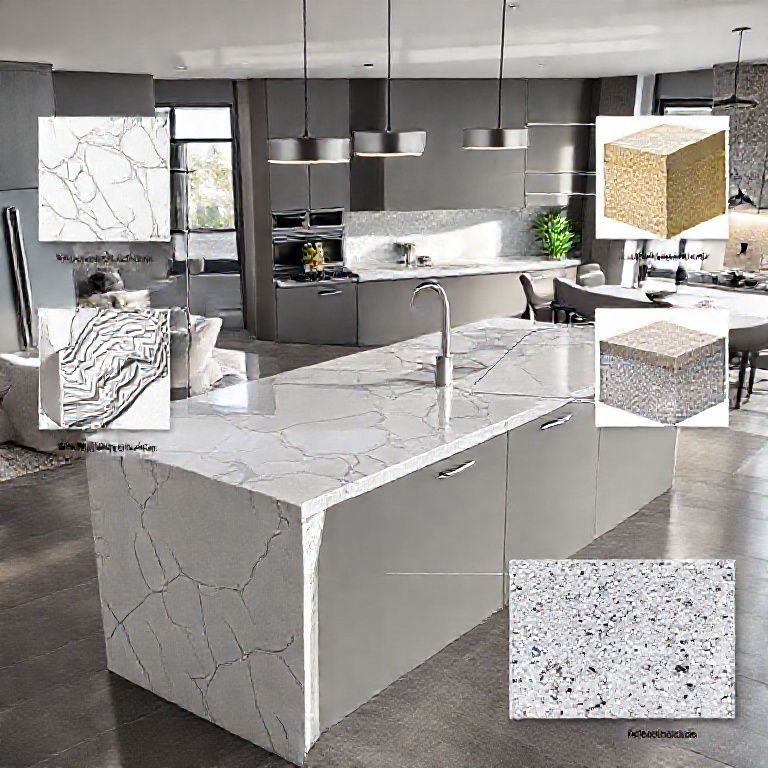
To understand the price, you first have to understand what you’re actually buying. Quartz is an engineered stone. Unlike granite or marble, which are quarried in massive blocks and sliced into slabs, quartz countertops are a symphony of nature and technology. They are typically composed of about 90% to 94% crushed natural quartz crystals, bound together with high-quality polymer resins and infused with pigments for color. This process creates a surface that is non-porous, incredibly hard, and—most importantly for the design-conscious—completely customizable in terms of pattern and hue.
The first major factor influencing that “per meter” price is the quartz content itself. High-end manufacturers maintain a strict ratio of quartz to resin. If a manufacturer tries to cut costs by using more resin and less quartz, the resulting slab is more prone to scratching, scorching from hot pans, and even chemical staining. When you see a price that seems too good to be true, you’re often looking at a “resin-heavy” slab. It might look great in the showroom, but under the daily grind of a busy kitchen, it will lose its luster far sooner than a high-quality counterpart.
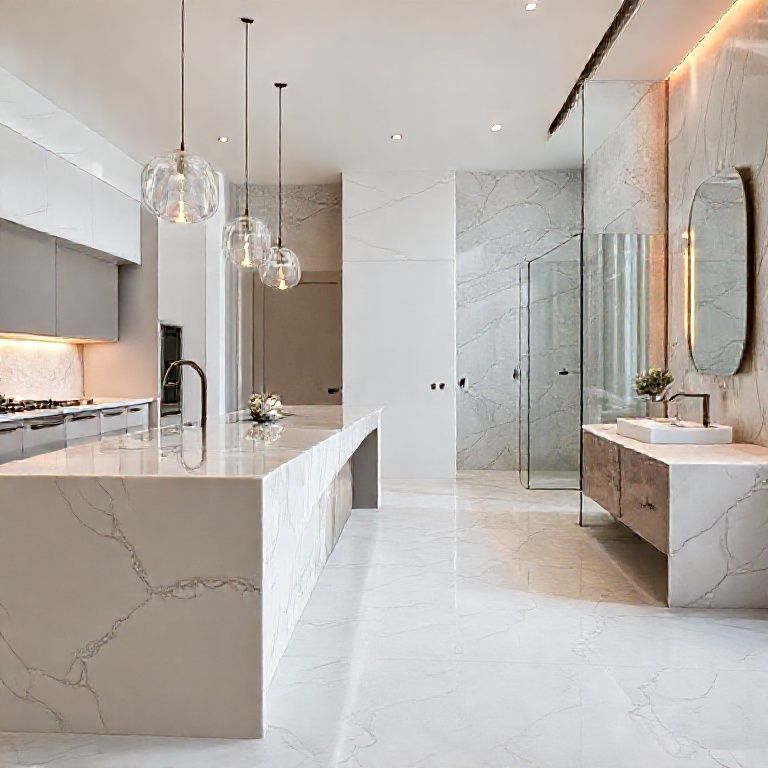
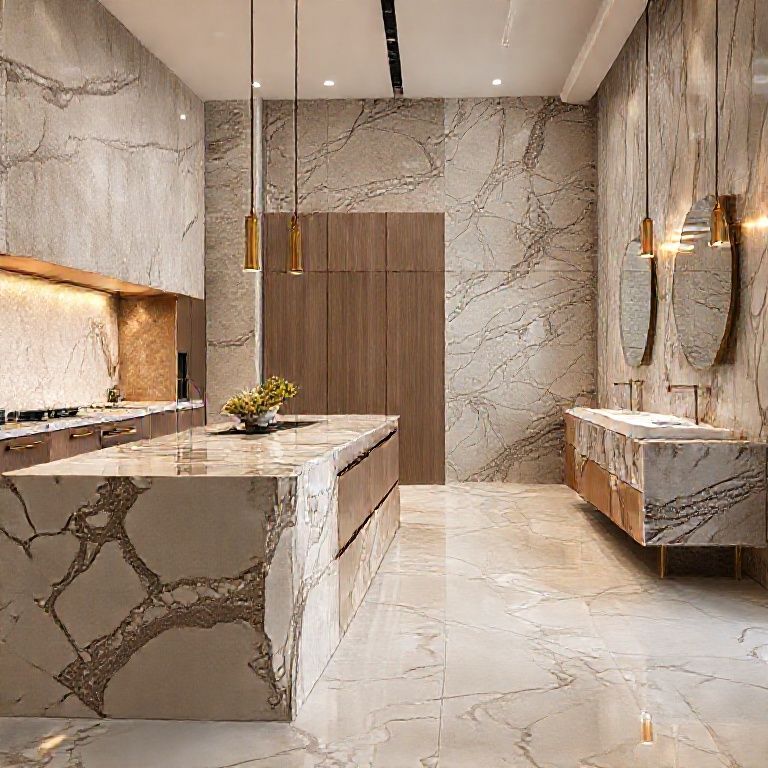
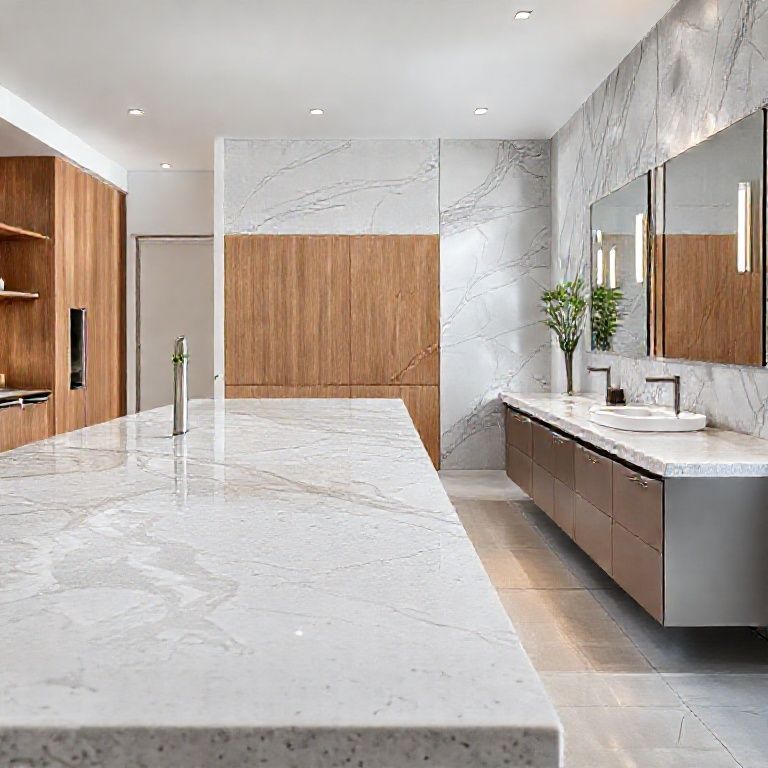
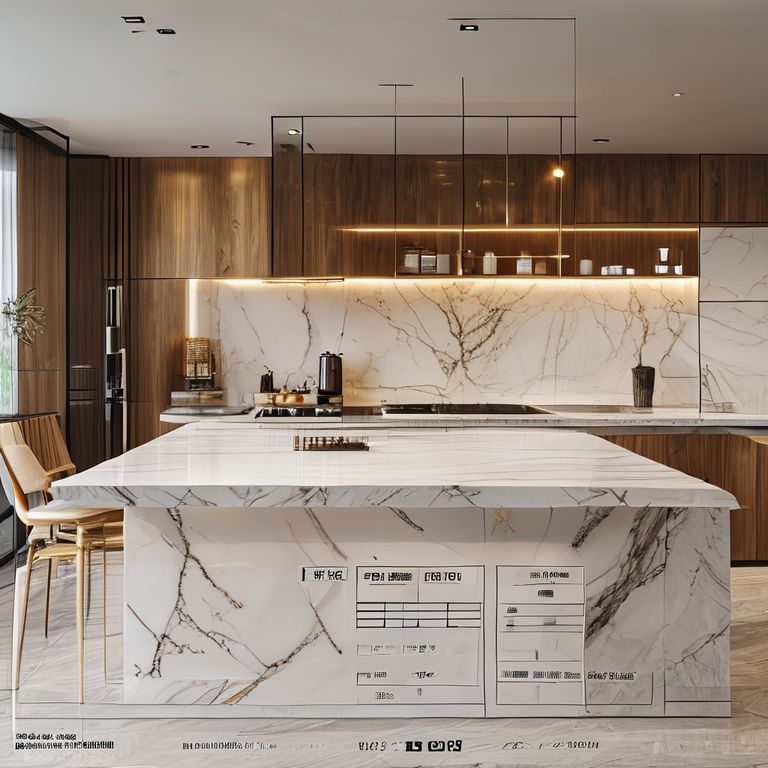
Then, there is the matter of aesthetics. This is where the price per meter really starts to climb. In the early days of quartz, the patterns were fairly uniform and “grainy.” Today, technology allows manufacturers to mimic the intricate, flowing veins of rare Italian marble like Calacatta or Statuario. Creating these “long-vein” patterns is an art form that requires sophisticated machinery and meticulous quality control. If you want a slab that has the dramatic, sweeping movements of natural stone without the high-maintenance headache of marble, you’re going to be looking at the premium tier of the pricing spectrum.
Thickness also plays a pivotal role in the quote you receive. Generally, quartz slabs come in 1.5cm, 2cm, and 3cm thicknesses. The 3cm slab is the gold standard for luxury kitchens, providing a chunky, substantial look that doesn’t require a plywood sub-top for support. Naturally, more material equals a higher price per meter. However, many clever designers use 2cm slabs with a “mitered edge” to give the illusion of a much thicker, heavier stone, which can sometimes be a more cost-effective way to achieve a high-end look—though the labor for that mitered edge will add its own cost.
Finally, we have to talk about the brand. Names like Caesarstone, Silestone, and Cambria are the “Chanels” of the countertop world. When you buy from these brands, you aren’t just paying for the stone; you’re paying for a massive R&D department that ensures the colors are trend-setting, the warranty is ironclad, and the environmental standards are top-tier. For many homeowners, that peace of mind is worth the extra $100 per meter. But if you’re a savvy shopper, there are many “unbranded” or local fabricator-sourced slabs that offer comparable quality for a fraction of the price—you just have to know what to look for.
As we move into the actual logistics of purchasing, it’s vital to remember that the “per meter” price is rarely the final price you see on your invoice. There is a whole world of fabrication and installation nuances that can turn a “bargain” into a major investment.
Continuing our journey into the economics of the kitchen, we must address the “Hidden Geometry” of countertop pricing. When a supplier gives you a price per meter, they are often giving you the raw material cost. However, a slab of quartz sitting in a warehouse is a very different thing from a finished countertop installed in your home.
The first “hidden” cost is fabrication. Quartz is incredibly hard—that’s why we love it—but that hardness means it requires specialized diamond-tipped tools to cut and polish. Every sink cutout, every cooktop hole, and every faucet piercing adds to the labor cost. If you’ve fallen in love with an undermount sink (where the sink sits beneath the stone), the fabricator has to spend hours polishing the inside edge of that hole to perfection. That labor isn’t reflected in the “per meter” price of the slab, but it will certainly be reflected in your final quote.
Then there’s the question of edges. A standard “eased” or “square” edge is usually included in the base price. But if you want something more ornate—like an Ogee, a Bullnose, or a sophisticated Mitered apron—the price per meter of the finished project will climb. These edges require more time on the CNC machine or more hand-polishing by a skilled craftsman. In high-end kitchen design, the edge profile is often what separates a “nice” kitchen from a “showstopper” kitchen.
Waste is another factor that many homeowners overlook. Quartz is sold by the slab or by the meter, but your kitchen dimensions rarely align perfectly with the dimensions of the stone. If your kitchen layout requires just a few inches more than one slab, you might find yourself having to pay for a whole second slab. This is why “price per meter” can be a bit of a moving target. Professional fabricators will use “nesting” software to minimize waste, but the complexity of your kitchen layout (U-shaped kitchens vs. simple islands) will ultimately dictate how much “dead” stone you’re paying for.
Beyond the physical stone, you’re also paying for the expertise of the installation team. Installing quartz is a high-stakes game. A single 3-meter slab can weigh hundreds of pounds. If the installers aren’t precise, they could crack the stone during the move or leave you with unsightly seams where two pieces meet. A “cheap” installation often results in seams that are wide, off-color, or rough to the touch. A premium installation features seams that are virtually invisible, color-matched with specialized epoxy. When you’re asking “how much per meter,” always ask if that includes professional leveling and seam-joining.
So, how do you navigate this to get the best value?
First, consider the “visual impact” zones. If you have a massive island that serves as the centerpiece of the room, that might be the place to splurge on a premium, highly-veined $400/meter slab. For the perimeter counters where the toaster and coffee maker live, you could opt for a complementary solid-colored quartz that costs significantly less. This “mix and match” strategy is a favorite among interior designers to balance beauty and budget.
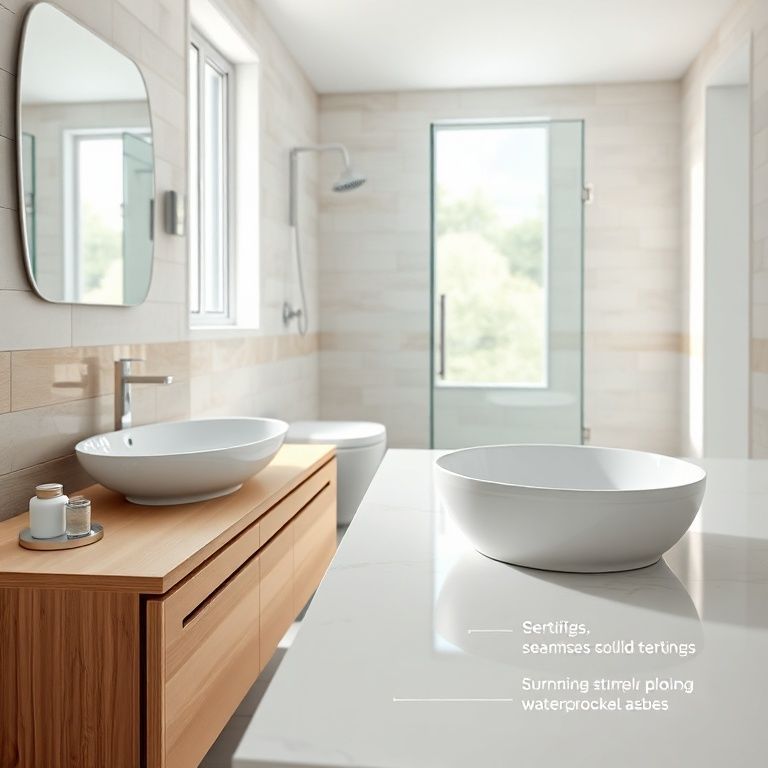
Second, don’t be afraid to look at “remnants.” If you’re doing a smaller kitchen or just a bathroom vanity, fabricators often have leftovers from large projects—beautiful pieces of high-end quartz—that they’ll sell at a massive discount just to clear space in their yard. You could get a $500/meter stone for $100/meter if you happen to need a piece that fits their leftover scrap.
Third, think about the long-term ROI (Return on Investment). Quartz is essentially a “forever” material. Unlike marble, which you’ll be obsessively sealing every year and panicking over every spilled drop of red wine, quartz requires zero maintenance. No sealing, no waxing, just a wipe with a damp cloth. When you calculate the “cost per meter” over 20 years, quartz often ends up being the most affordable luxury material on the market because it simply doesn’t age.
In the end, when you ask “橱柜台面石英石多少钱一米” (How much per meter is kitchen quartz?), you’re really asking about the value of your home’s future. Whether you choose a budget-friendly solid grey or a breathtaking faux-Calacatta, quartz is an investment in durability and daily joy. Don’t just settle for the lowest number on the page. Look for the right balance of quartz-to-resin ratio, the skill of the fabricator, and a design that makes you smile every time you walk into the room. After all, the kitchen isn’t just a place to cook; it’s a place to live. And a beautiful, resilient quartz surface is the stage upon which that life happens.