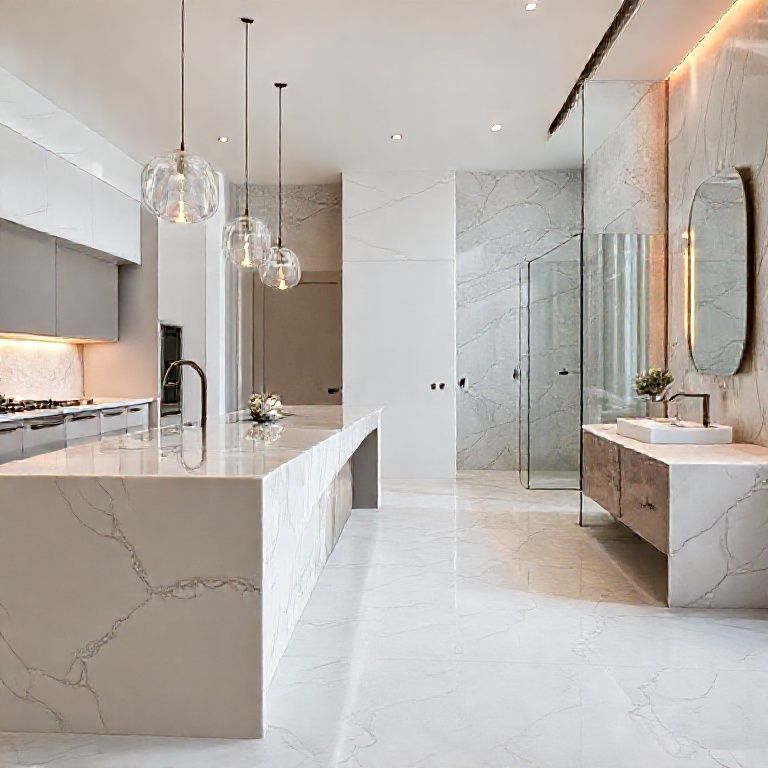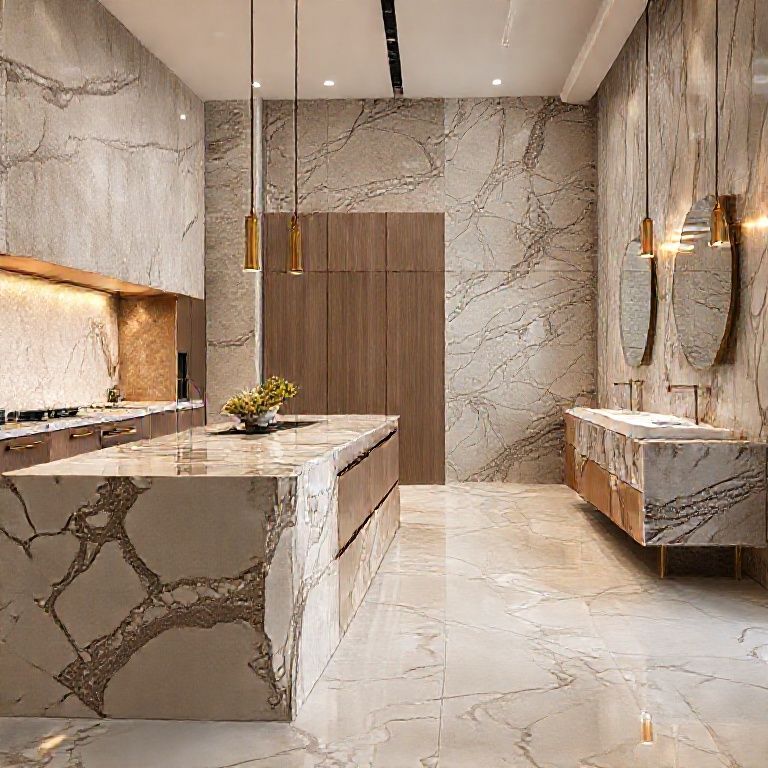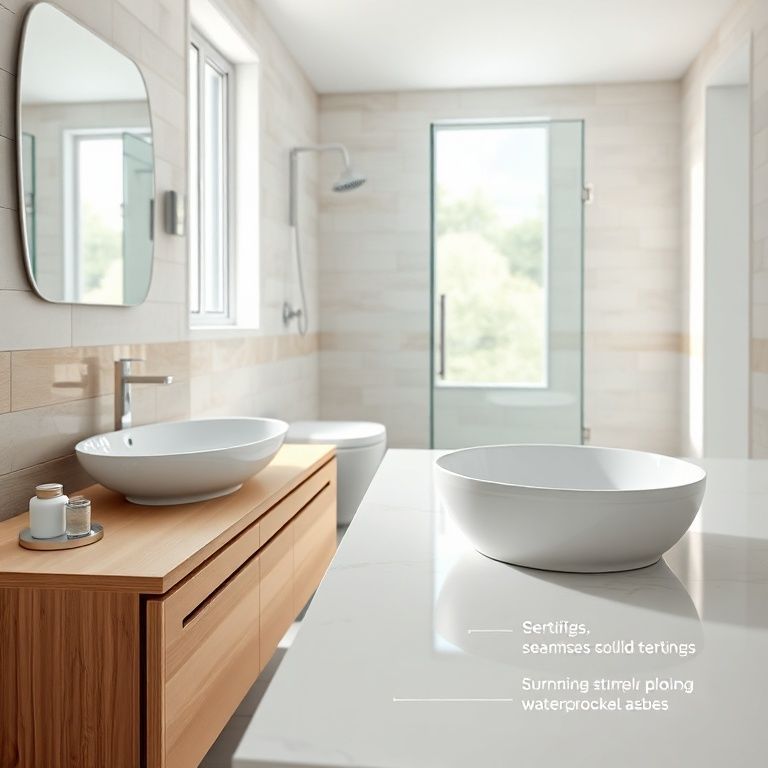
The Allure of Quartz: Why Your Countertop is the Heart of the Home
If you have spent even five minutes scrolling through architectural digests or Pinterest boards lately, you know that quartz is the undisputed heavyweight champion of the modern kitchen. It’s sleek, it’s indestructible, and it possesses that rare ability to look both ancient and futuristic at the same time. But as soon as you step into a showroom or start browsing suppliers, you’re hit with the inevitable question that stalls many renovation dreams: “How much is quartz stone per meter, and how on earth do they calculate it?”
The truth is, the world of stone fabrication can often feel like a “black box.” You see a beautiful slab of Calacatta Gold or a minimalist concrete-grey surface, and the price tag says one thing, but the final invoice says another. Understanding the price of quartz per meter isn’t just about the raw material; it’s about understanding the craftsmanship, the chemistry, and the logistics that go into turning a slab of engineered stone into the centerpiece of your home.
The Price Range: From Budget-Friendly to Luxury Heights
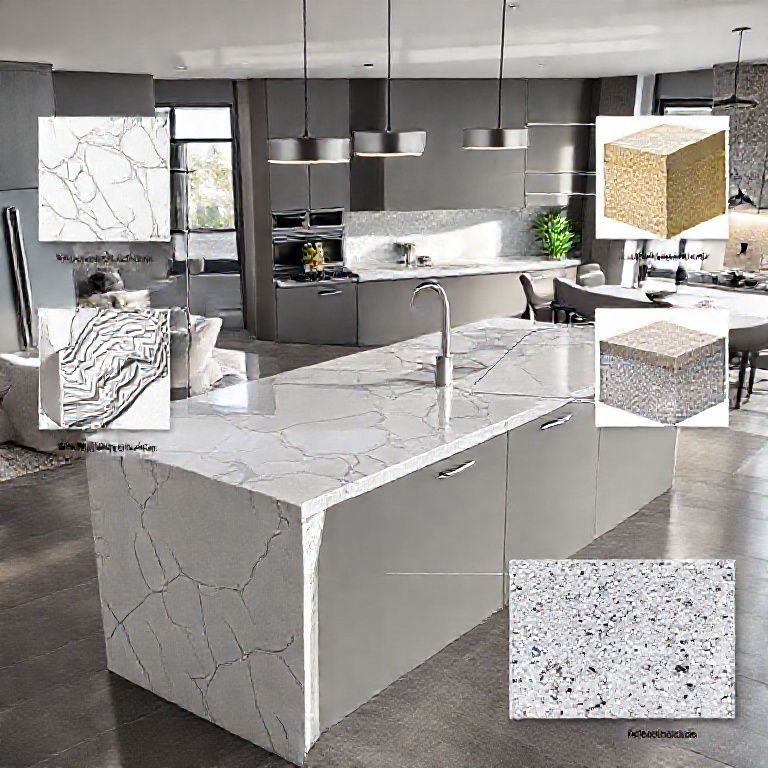
In today’s market, the price for quartz stone typically ranges anywhere from $50 to over $300 per linear meter (or roughly 300 RMB to 2500+ RMB depending on the region and currency). Why such a massive gap? It’s because “quartz” isn’t just one product. It is an engineered composite made of roughly 90-95% crushed natural quartz and 5-10% polyester resins and pigments.
Entry-level quartz is often mass-produced with simpler patterns—think “salt and pepper” grains or solid whites. These are reliable, durable, and perfect for rental properties or laundry rooms. However, as you move into the mid-to-high range, you are paying for artistry. The intricate veining that mimics high-end Italian marble, the depth of color, and the specialized finishes (like “leathereded” or “honed”) require sophisticated vacuum-vibration-compression technology. When you ask “how much per meter,” you are essentially asking about the complexity of the recipe and the prestige of the brand.
The “Thickness” Factor: 15mm vs. 20mm vs. 30mm
One of the most immediate variables in the “per meter” calculation is the thickness of the slab. In the global market, 1.5cm (15mm) and 2.0cm (20mm) are standard, but many luxury designs call for 3.0cm (30mm) for that chunky, substantial feel.
Thicker slabs naturally cost more because they contain more raw material and are heavier to transport. However, there is a design trick you should know. Many modern “thick” countertops are actually 20mm slabs with a “mitered edge.” This is where the fabricator cuts the edge at a 45-degree angle and joins it to another piece to create the illusion of a massive, 60mm thick block. In this case, your “price per meter” might be lower for the material, but your “processing fee” will climb. It’s a delicate balance between material cost and labor.
The Science of Quality: Why Some Quartz is Cheaper
You might find a supplier offering quartz at a suspiciously low price. Before you jump on the “deal,” it’s vital to understand what happens inside the factory. High-quality quartz is processed under immense pressure to remove all air pockets. This makes it non-porous, meaning it won’t harbor bacteria or stain when you spill red wine or coffee.
Lower-priced quartz often cuts corners on the resin quality or the compression time. If the resin content is too high, the countertop becomes prone to scratching and can even “scorch” if you place a hot pan near it. If the compression isn’t high enough, the stone remains slightly porous. The “price per meter” reflects the density of the stone. A high-quality slab feels cold to the touch and rings like a bell when tapped; a cheap slab can feel almost plastic-like. When calculating your budget, remember that you aren’t just buying a surface; you’re buying a decade or two of peace of mind.
Brand Name vs. Local Fabricators
Just like buying a car, branding plays a huge role in the “how much” equation. Global giants like Caesarstone, Silestone, and Cambria have massive R&D budgets. They lead the trends, creating colors that local manufacturers will spend the next three years trying to copy. If you want the absolute latest “look,” you will pay a premium of 30-50% for the brand.
On the other hand, local or “unbranded” quartz can be an incredible value. If you find a reputable local fabricator who sources high-grade slabs, you can often get a look that is 95% identical to a premium brand for a fraction of the cost. The key here is to check the slab for “bleeding” (where colors run together unintentionally) or “pitting” (tiny holes on the surface). If the slab looks clean under bright lights, the “per meter” price of a local brand is often the smartest move for a budget-conscious but high-style renovation.
Mastering the Math: How to Calculate Your Countertop Cost
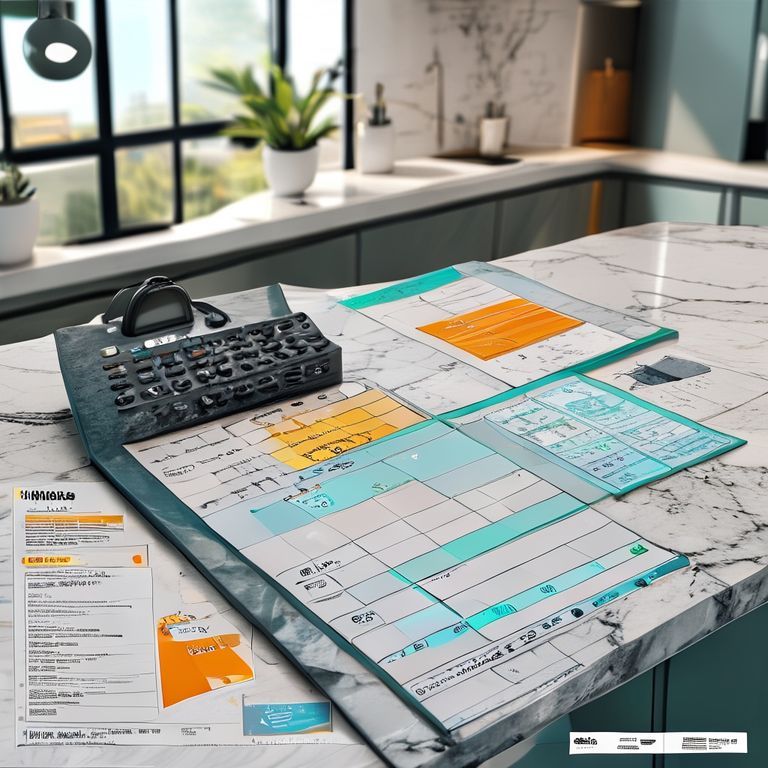
Now that we understand the “why” behind the prices, let’s get into the “how” of the calculation. This is where most homeowners get confused. In the stone industry, prices are usually quoted in one of two ways: Linear Meters (Running Meters) or Square Meters.
2. The Square Meter Method: Commercial projects and large islands are often calculated by the square meter. This is more accurate for oddly shaped kitchens. Formula: (Length x Width) = Total Square Meters. Total Square Meters x Price per Square Meter = Base Material Cost. When comparing quotes, always ask: “Are you quoting me by the linear meter or the square meter?” A price that looks low at first might actually be more expensive once the width of your island is factored in.
The “Hidden” Extras: It’s Not Just the Stone
When you see a price like “100 per meter,” that is rarely the final price you will pay. To get an accurate budget, you must account for the “Processing and Installation” fees. These can sometimes equal the cost of the stone itself.
Edge Profiles: A standard “eased” edge (slightly rounded corners) is usually included. However, if you want a Bullnose, Ogee, or a Mitered Apron edge, expect to pay an extra $20 to $50 per meter. These require specialized CNC machinery and hand-polishing. Sink Cutouts: This is a big one. An “over-mount” sink (where the lip sits on top of the stone) is cheap to cut. An “under-mount” sink requires the fabricator to polish the inside edge of the stone where it meets the sink. This labor-intensive process usually carries a flat fee of $100-$200 per hole. The “Loss Ratio” (Wastage): Quartz comes in giant slabs (usually around 3.2m x 1.6m). If your kitchen needs 3.5 meters of stone, the fabricator has to cut into a second slab. You might have to pay for the “wastage” of that second slab even though you only used a small piece of it. Smart designers try to plan their kitchen dimensions to fit within whole slab increments to save money.
Installation and Logistics: The Final Piece of the Puzzle
The final component of the “per meter” price is the installation. Quartz is heavy—incredibly heavy. A standard slab can weigh over 200 kilograms. The cost of labor includes templating (coming to your house with lasers to measure the exact shape of your walls, which are never perfectly straight), transportation, and the actual installation.
Professional installers will also use “seam setters”—specialized suction tools that pull two pieces of quartz together so tightly that the seam becomes nearly invisible. If your quote seems much lower than others, they might be skipping the high-end resins used to join seams, which can lead to visible yellowing lines over time. Always ask if the “per meter” price includes “Measurement, Delivery, and Installation” (MDI).
How to Get the Best Value for Your Money
If you are looking to maximize your “quartz per meter” investment, here are three insider tips:
Wholesale Sourcing: Visit a stone yard rather than a boutique showroom. Buying the slab directly and then hiring a fabricator can save you the showroom markup. Remnants for Small Spaces: If you only need a bathroom vanity or a small coffee bar, don’t buy a whole meter. Ask for “remnants”—the leftover pieces from someone else’s large kitchen project. You can often get high-end, luxury quartz for 50-70% off. Standardize Your Depth: Stick to the 600mm standard depth wherever possible. As soon as you go to 650mm or 700mm, the “linear meter” pricing model breaks, and costs skyrocket.
Conclusion: Investing in the Long Game
In the end, “石英石一米多少钱” (How much is quartz stone per meter) is just the starting point of the conversation. When you calculate the cost, you aren’t just buying a piece of stone; you are buying the surface where your kids will do their homework, where you will prep holiday dinners, and where friends will gather for years to come.
Don’t just chase the lowest number. Look for a price that represents a balance of high-purity quartz, expert fabrication, and a seamless installation. A well-chosen quartz countertop, calculated correctly and installed professionally, won’t just add value to your home—it will change the way you experience your kitchen every single day. Whether you go for a budget-friendly solid grey or a sprawling, veined masterpiece, knowing the math behind the beauty ensures that you stay in control of your renovation journey.