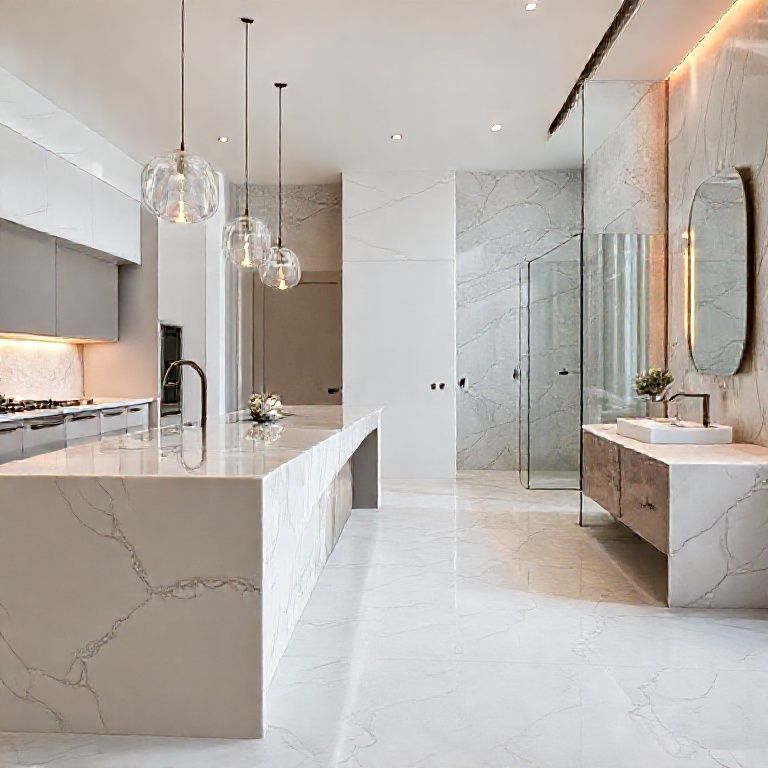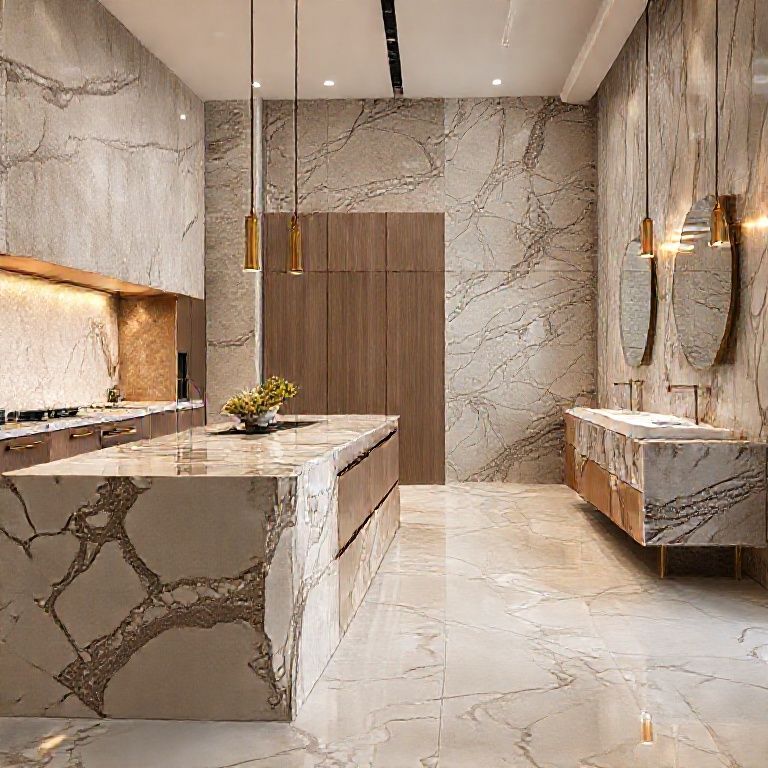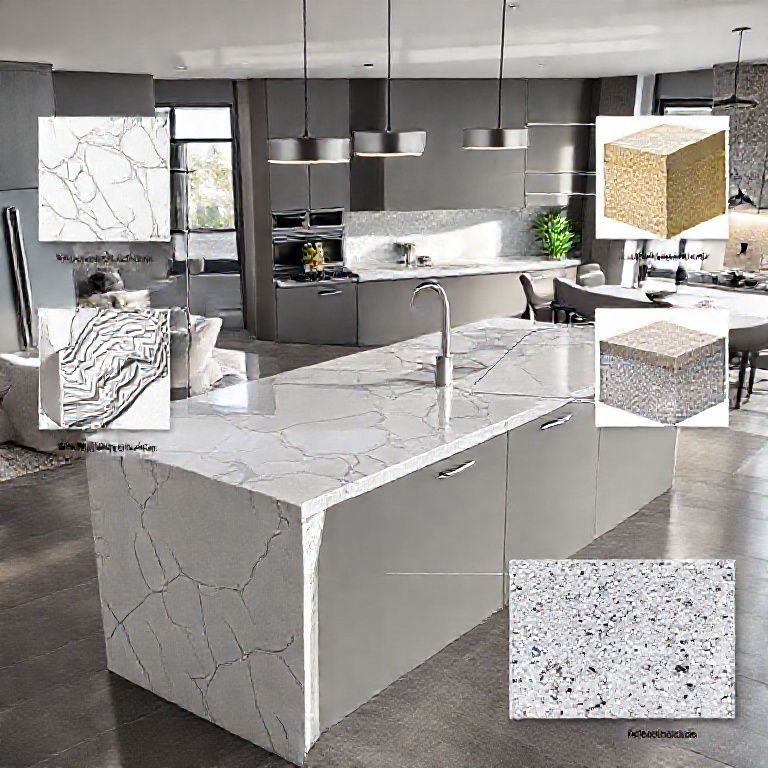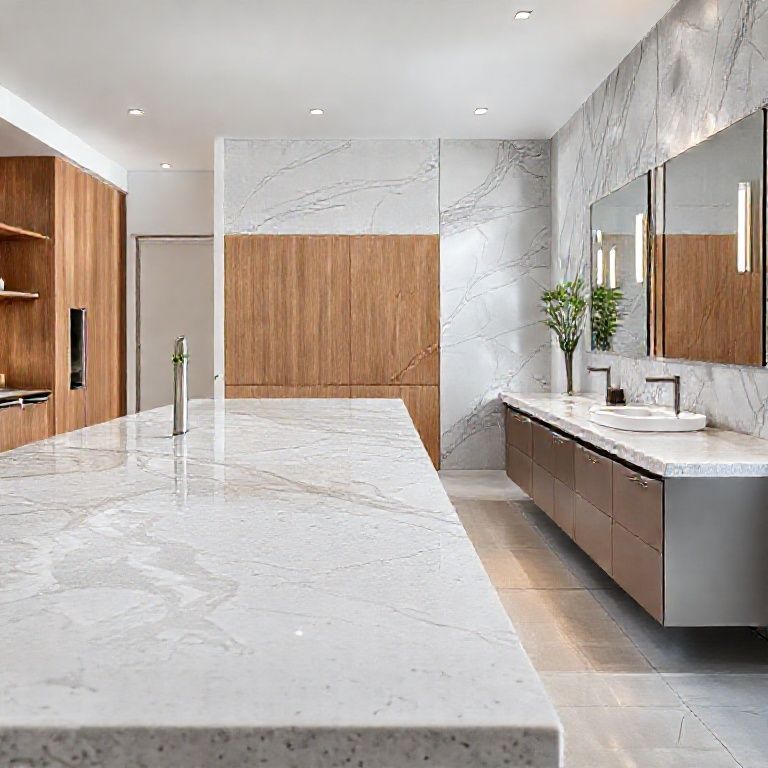
When you step into a high-end kitchen showroom, there is a specific feeling of gravity and grace that hits you. It isn’t just the lighting or the high-tech appliances; it is the surfaces. Specifically, it is the countertops. For years, the industry standard for a “luxury” look was the heavy, chunky 3cm slab. But as design aesthetics have shifted toward the sleek, the minimalist, and the European-inspired, a new hero has emerged: the 1.5cm (15mm) quartz slab. If you are currently scrolling through Pinterest or wandering the aisles of a home improvement store, you are likely asking the million-dollar question: “How much is 1.5cm quartz per meter, and is it the right choice for my home?”
To understand the price, we first have to understand the value. Quartz is not a natural stone in the way marble or granite is; it is an engineered marvel. Composed of roughly 90-94% crushed natural quartz and 6-10% resins and pigments, it offers a level of durability and non-porosity that nature simply couldn’t achieve on its own. The 1.5cm thickness is the “sweet spot” for many modern homeowners. It provides enough structural integrity to withstand the chaos of a busy family kitchen while maintaining a slim, elegant profile that feels light and contemporary.
So, let’s talk numbers. When asking about the price of 1.5cm quartz per meter, the answer is rarely a single figure. In the global market, and particularly in regions focusing on high-quality manufacturing, you can expect a wide spectrum. Generally, for a standard, non-branded or “builder-grade” 1.5cm quartz, prices often start around $60 to $100 per linear meter. However, if you are looking for premium aesthetics—think intricate veining that mimics Calacatta marble or deep, obsidian hues with matte finishes—that price can easily climb to $200 or even $400 per meter.
Why the massive gap? It comes down to the “Recipe of the Stone.” Cheap quartz often uses lower-quality resins that can yellow over time when exposed to UV light, or they have a lower concentration of quartz, making them more prone to scratches. When you pay a premium for that 1.5cm slab, you aren’t just paying for the look; you are paying for a surface that won’t succumb to the “white ring” of a hot coffee mug or the accidental slip of a paring knife.
The 1.5cm thickness specifically offers a unique cost-saving opportunity that many people overlook. Because it is lighter than its 2cm or 3cm counterparts, shipping costs are lower, and the physical labor required to move and install the slabs is reduced. This doesn’t always mean the sticker price is lower, but it often means the “all-in” installation price is more competitive. Furthermore, the 1.5cm profile is a darling of the “mitered edge” technique. This is where fabricators cut the edges at a 45-degree angle to join them, creating the illusion of a massive, 6cm or 10cm thick block of stone. Using a 1.5cm base slab makes this process significantly easier and more precise than trying to do it with thicker, more unwieldy materials.
Beyond the raw material cost, the “per meter” price is heavily influenced by the complexity of the design. Are you looking for a solid “Salt and Pepper” pattern? These are the workhorses of the quartz world—affordable, consistent, and widely available. Or are you chasing the “Jumbo Slab” dream with long, flowing veins that need to be book-matched across your kitchen island? The latter requires a higher level of engineering and waste management, which pushes the price up.
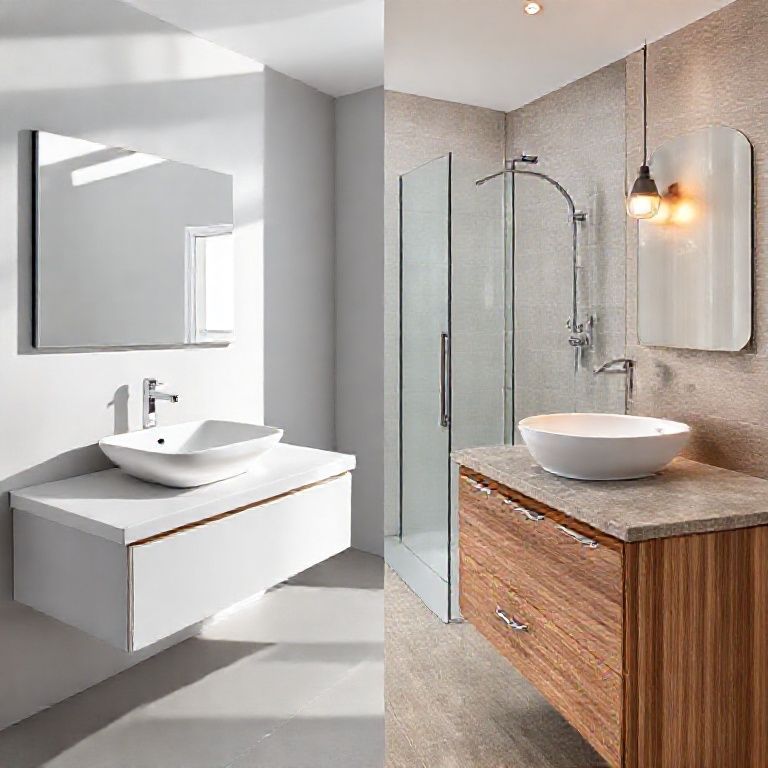
In the world of interior design, 1.5cm is often called the “Architectural Thickness.” It allows for a “floating” look that is impossible with heavier stones. Designers love to use it for backsplashes that perfectly match the countertop, creating a seamless “monolithic” look. When you calculate the price per meter for a 1.5cm slab, you should also consider that you might be able to use the same material for your bathroom vanities or even as wall cladding in a shower. This bulk purchasing can often lead to discounts from suppliers, bringing your average cost per meter down.
However, a word of caution for the budget-conscious: do not confuse 1.5cm quartz with “thin” or “fragile.” In the past, people worried that anything less than 3cm would crack. Modern manufacturing has debunked this. The resin binders in 1.5cm quartz provide a flexural strength that natural stone lacks. While a 1.5cm marble slab might snap under the pressure of a heavy grocery bag, a 1.5cm quartz slab is incredibly resilient. This resilience is exactly what you are paying for. You are buying peace of mind disguised as a beautiful, slimline worktop.
Continuing our deep dive into the financial and aesthetic world of 1.5cm quartz, we have to look at the “hidden” variables that dictate the price per meter. If you’ve received a quote that seems suspiciously high or surprisingly low, it’s likely due to one of three things: fabrication, brand prestige, or regional logistics.
Fabrication is the silent price-driver. When you buy a meter of quartz, you aren’t just buying a rectangular piece of stone. You are buying the precision of a CNC machine and the steady hand of a master polisher. For a 1.5cm slab, the fabrication costs can sometimes be higher than the stone itself if you have a complicated kitchen layout. Every sink cutout (especially under-mount sinks), every hole for a faucet, and every “waterfall” edge (where the quartz continues down the side of the cabinet to the floor) adds to the labor cost. On average, you should expect to add 30% to 50% on top of the raw material price for fabrication and installation. When someone quotes you “$100 per meter,” always ask: “Is that for the slab, or for the finished, installed counter?”
Then, there is the power of the brand. In the quartz industry, names like Caesarstone, Silestone, and Cambria carry a premium. These companies spend millions on R&D to create unique textures—like “suede” or “volcano”—and colors that look so much like natural stone you’d swear they were quarried from the Italian Alps. Buying a 1.5cm slab from a major brand might cost you $250 per meter, but it comes with a 15-to-25-year warranty. On the other hand, “unbranded” quartz from reputable local wholesalers can offer similar durability for $120 per meter, but the color palette might be more limited, and the warranty might only be as good as the shop’s reputation.
Logistics also play a massive role. Quartz is heavy. Even at 1.5cm, a full slab can weigh hundreds of pounds. If you live in an area far from a major port or a manufacturing hub, the “per meter” price will climb to cover the freight. This is why it’s always smart to source from a local distributor who has the stock on hand.
Now, let’s talk about why people are choosing 1.5cm quartz despite the price fluctuations. It’s all about the “Modern European” look. In cities like Milan, Berlin, and Paris, the “thick slab” look is considered dated. Designers there prefer the “slimline” aesthetic because it makes the kitchen feel more like furniture and less like a laboratory. A 1.5cm quartz countertop allows for handle-less cabinet designs to shine; it doesn’t overwhelm the visual space. If you have a small kitchen, a 1.5cm slab can actually make the room feel larger because it takes up less “visual weight.”
When budgeting, consider the “Long-Term ROI” (Return on Investment). A 1.5cm quartz countertop is a selling point for any home. Unlike laminate, which peels, or wood, which rots, quartz stays pristine. When a potential buyer walks into your kitchen and sees a sleek, 1.5cm quartz surface, they see value. They see a kitchen that doesn’t need work. In that sense, the $150 or $200 you spend per meter now is an investment in the equity of your home.
How do you get the best price? Here is an insider tip: look for “remnants.” Because 1.5cm is a popular thickness for bathroom vanities and smaller projects, stone yards often have leftovers from large commercial jobs. If you only need a couple of meters for a small kitchen or a laundry room, you can often pick up a high-end 1.5cm slab for a fraction of the retail price. You might get a $300-per-meter designer stone for $80 simply because it’s a “scrap” from a larger project.
Furthermore, always verify the “Grade” of the quartz. Grade A quartz has a higher clarity and fewer impurities. Grade B might have small “resin pools” (tiny spots where the color isn’t perfectly mixed) or small pits. For a 1.5cm slab, you want Grade A. Because the profile is so slim, any imperfection is more noticeable than it would be on a thick, busy 3cm slab.
In conclusion, the price of 1.5cm quartz is a reflection of its versatility, its engineering, and its place in modern design. While you might find entry-level options for under $100 per meter, the “sweet spot” for a high-quality, beautiful slab that will last a lifetime is usually between $150 and $250 per meter, plus installation. It is a material that asks for a higher upfront investment than laminate or tile, but pays dividends in style, durability, and daily joy. Whether you are building a professional-grade chef’s kitchen or a cozy breakfast nook, the 1.5cm quartz slab offers a sophisticated, resilient foundation that proves, sometimes, less really is more.
When you finally run your hand over that cool, smooth, 15mm edge, you won’t be thinking about the price per meter. You’ll be thinking about how perfectly it fits your life. It’s not just a countertop; it’s the stage where your home’s best moments—from morning coffees to late-night conversations—will play out for years to come. Choose wisely, shop locally, and don’t be afraid to go slim.